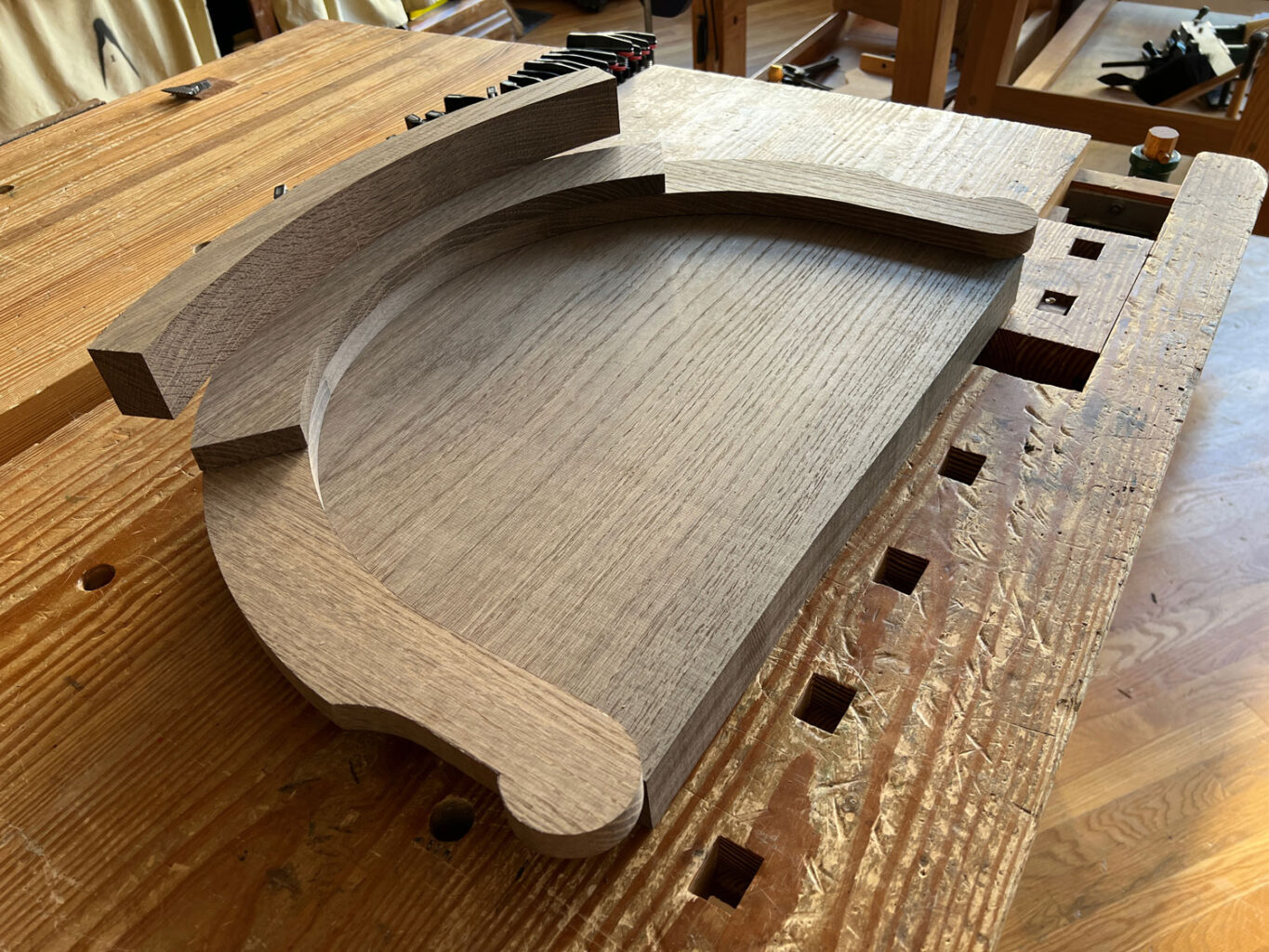
Bog oak chair parts on my bench this week.
For the last year I've been building chairs using slabs of bog oak that are 2,000 years old (according to a carbon dating test) and was harvested in Poland.
Furniture maker Andy Brownell is responsible for starting me down this path. He offered me some scraps of bog oak from one of his commission pieces. After experimenting with it and building a chair using the scraps, I was sold.
Together we bought a large chunk of a bog oak tree. It was the most I have ever spent on a single load of wood. However, don't be freaked by that statement. Because I work almost entirely with common domestic woods that aren't highly figured, my lumber bill has always been minimal.
This entry is about my experiences with the wood – good and bad. I've worked before with some older bog oak from Denmark, so I have a little perspective. But I am not an expert. Trees, like people, are individuals and are weird.
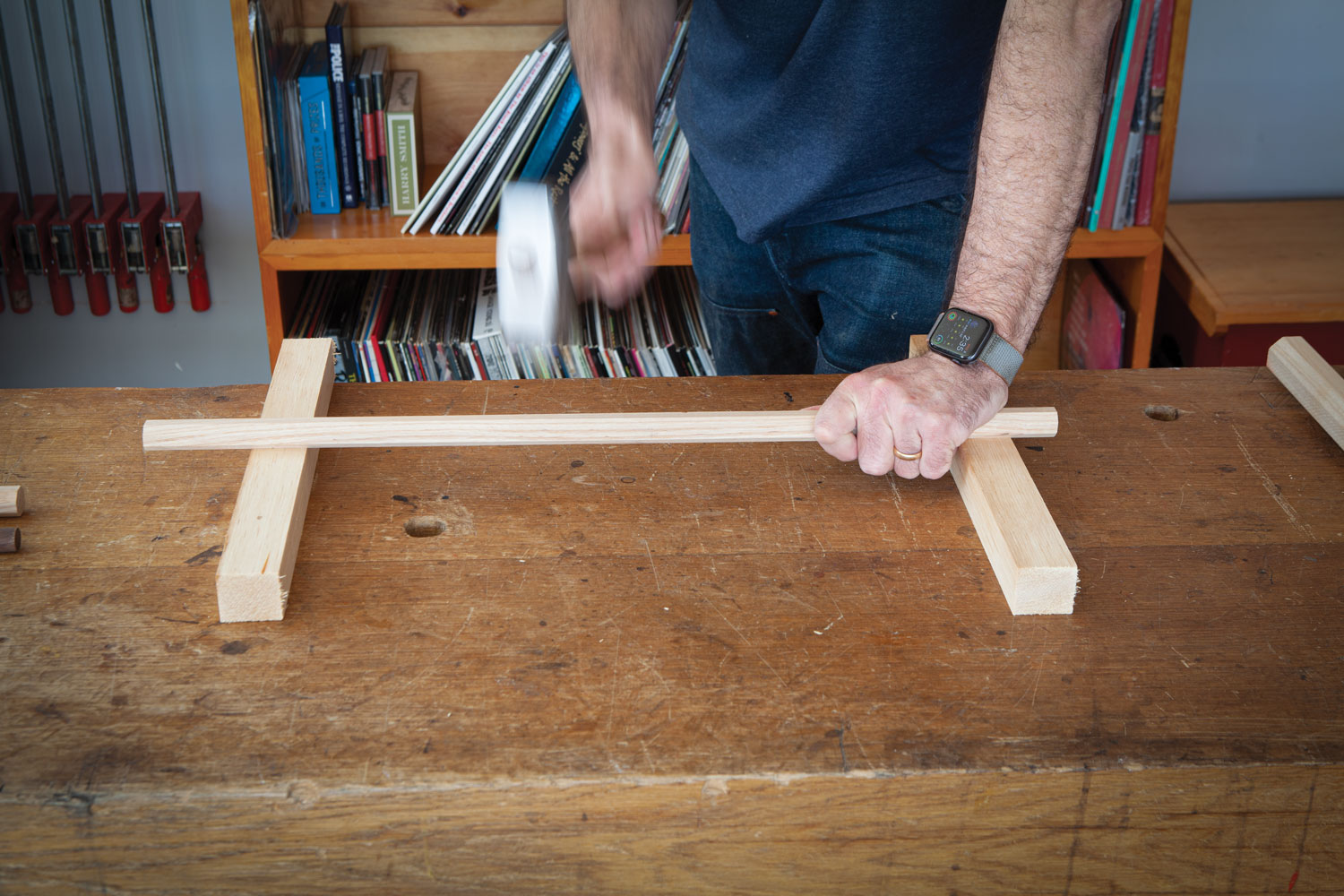
The hammer test I perform with chair parts.
Strength
My biggest concern with the bog oak was that it wasn't strong enough to use for a chair. This is oak that has been in a peat bog for 2,000 years and is on its way to becoming petrified. After wallowing in an anaerobic environment filled with turtle poop, is it too weak?
The good news is that the tree we bought was fast-grown oak. Some of the annular rings are 3/8" apart. Fast-grown oak is typically stronger than slow-grown oak. Also, the grain was incredibly straight, except at the butt of the tree. I have never worked with wood that is this rod-straight.
I made some sample chair-sized parts – legs, stretchers, sticks and arms. Then I propped the test pieces up on 4x4 blocks and smacked them with our lump hammer. Hard. They all survived just fine. No cracking, though they dented a little more easily than modern European oak.
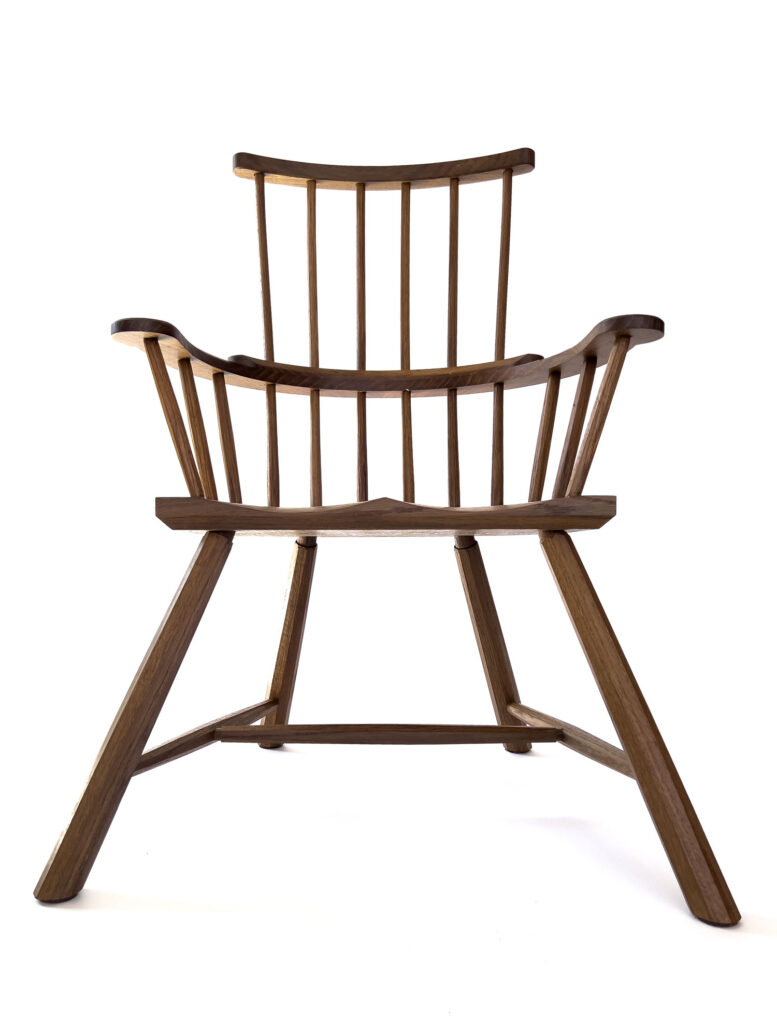
Because the parts passed the test, I made some chairs using the bog oak.
Working Properties
The bog oak feels a bit like plowing dirt at times, instead of slicing wood. The wood requires more effort to saw, chisel and shape than modern European oak (which I have a lot of experience with). I also feel like it is more difficult to get a finished surface, but it's not because of tear-out. It's because the stuff is dense and resists you.
It smells quite a bit when you cut it with electric machines. And the smell it makes is: bottomland. Mud, dirt and cod poo. But it's not awful. The worst-smelling wood I ever used was mahogany that had been sunk in the Amazon for 200 years. When you cut it, it smelled like rotten, burning fish that had been injected right into your nose.
The smell goes away quickly. And the finished pieces have zero smell (just like normal wood).
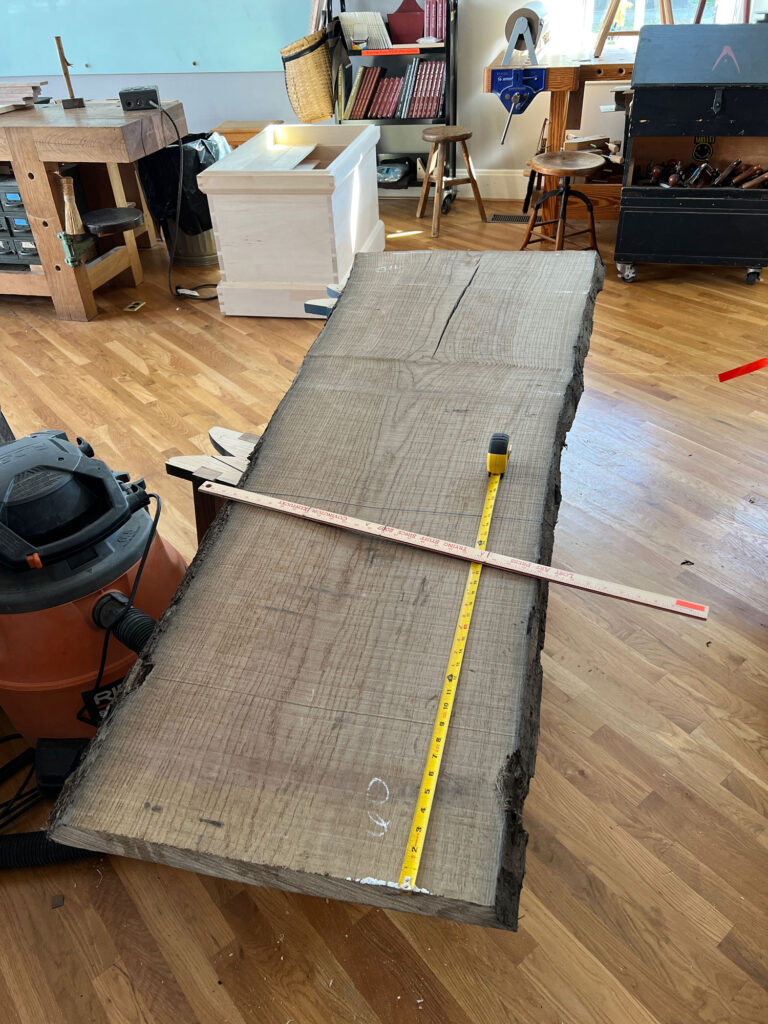
A slab of bog oak that shows the color variation.
Color
Bog oak gets darker as it percolates in the bog. I've worked with 4,000-year-old stuff that is almost black. This 2,000-year-old stuff has lots of variation. The wood by the bark is nearly black. The majority of the heartwood is a chocolate brown. And some parts are tan or khaki. And you see that variation all in one board from one tree.
So you have to think about color the entire time, even though the wood comes from the same damn tree. A stick from the bark part of the tree can look radically different from a stick 3" away.
Downsides and Defects
Wood that has been under ground/water for a long time can have some faults. I find far more structural faults with bog oak than standard European oak. Some of these splits and cracks look like the result of the wood being dried. Other cracks look much older (something killed this tree and sent it into the bog).
When ripping up the stuff, you absolutely have to pay close attention to the end grain and look for splits. Most of the splits I have found are near the pith of the tree, but I have also found some out by the bark.
I reject anything with a split for structural parts (basically all my chair parts). These pieces are fine for boxes or stuff that doesn't support a human body, but shakes and chair parts don't go together.
The other odd quality of the wood is that it's not good for making wedges. I made many bog oak wedges to secure the legs and sticks of the chair. It was poor wedge material. When struck on its end grain, the bog oak was mushy and split easily. (Even though it was strong when struck 90° to the end grain – weird.)
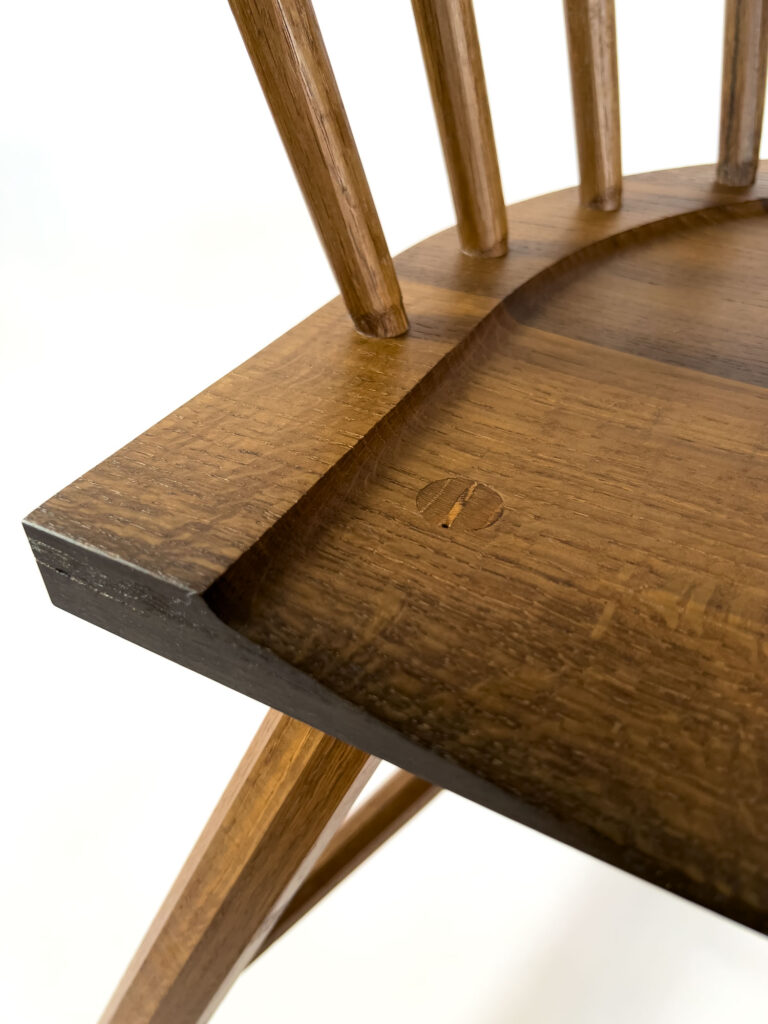
Here you can see the color variation.
The Upside
The stuff is beautiful, even with simple finishes. I use linseed oil and beeswax, and the range of color is extraordinary, from coal black to an olive green. Plus, after five or six chairs, I have found ways to use this color shift to my advantage in the design.
All in all, the stuff is worth working with. The prices I fetch for bog oak chairs make it worth the effort. However, I wouldn't want to work with it exclusively. It is recalcitrant. And I am always happy to start saddling a chair in modern red oak or white oak after working the boggy stuff for a couple weeks.
Where to get it? There are vendors who specialize in the stuff. I don't have experience buying from them, so do your research. Andy and I bought our bog oak from M. Bohlke, a long-time local supplier of amazing woods.
— Christopher Schwarz



No comments:
Post a Comment