[New post] Treasures, Treasuries & Tales of Several Cities
fitz posted: " The lower left cubby in the Covington Mechanical Library is a bit of a hodgepodge that spans oceans and centuries. In it are two series of books, a British furniture tome, some American furniture collections – regional and not – a few Charleston furn" Lost Art Press
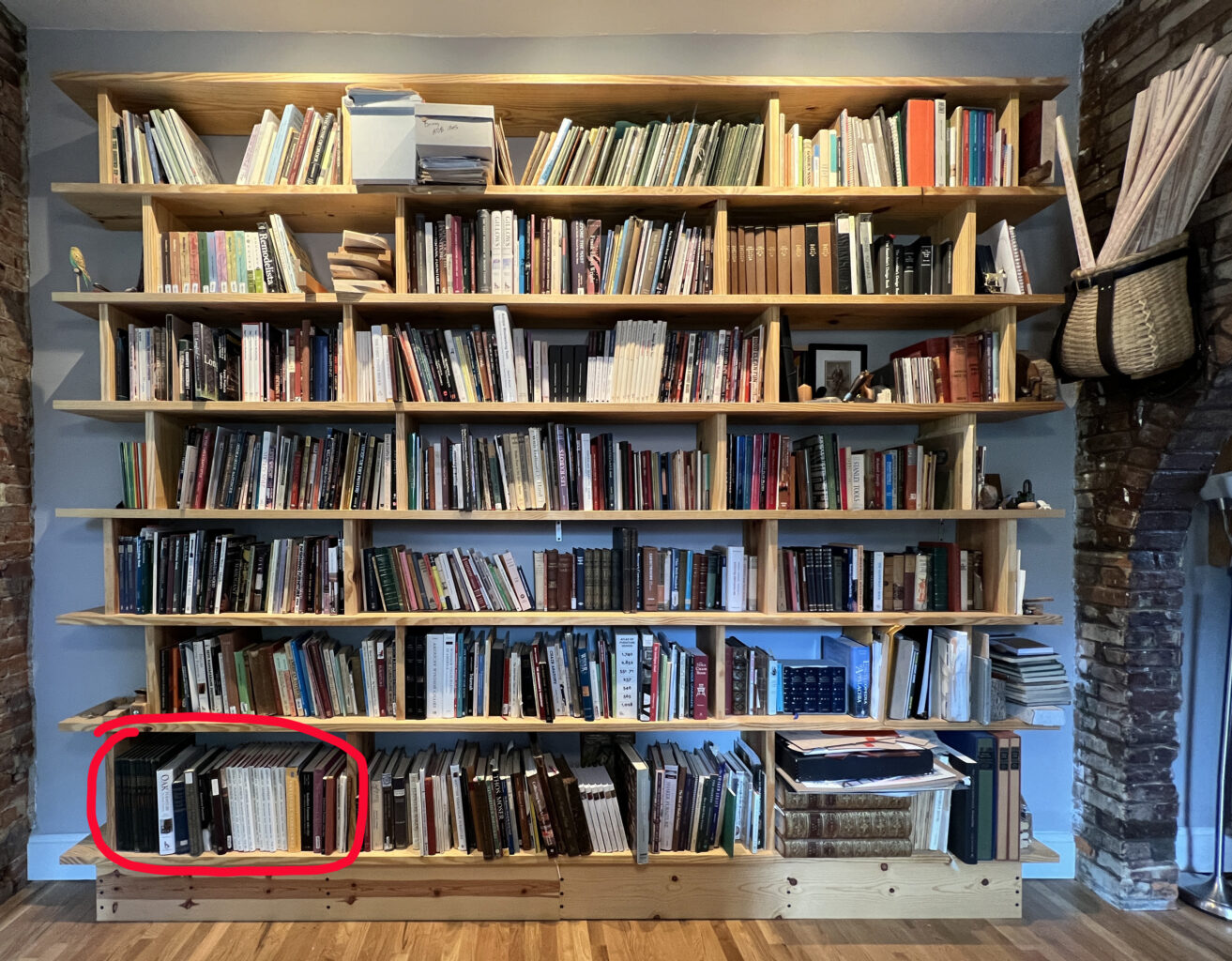
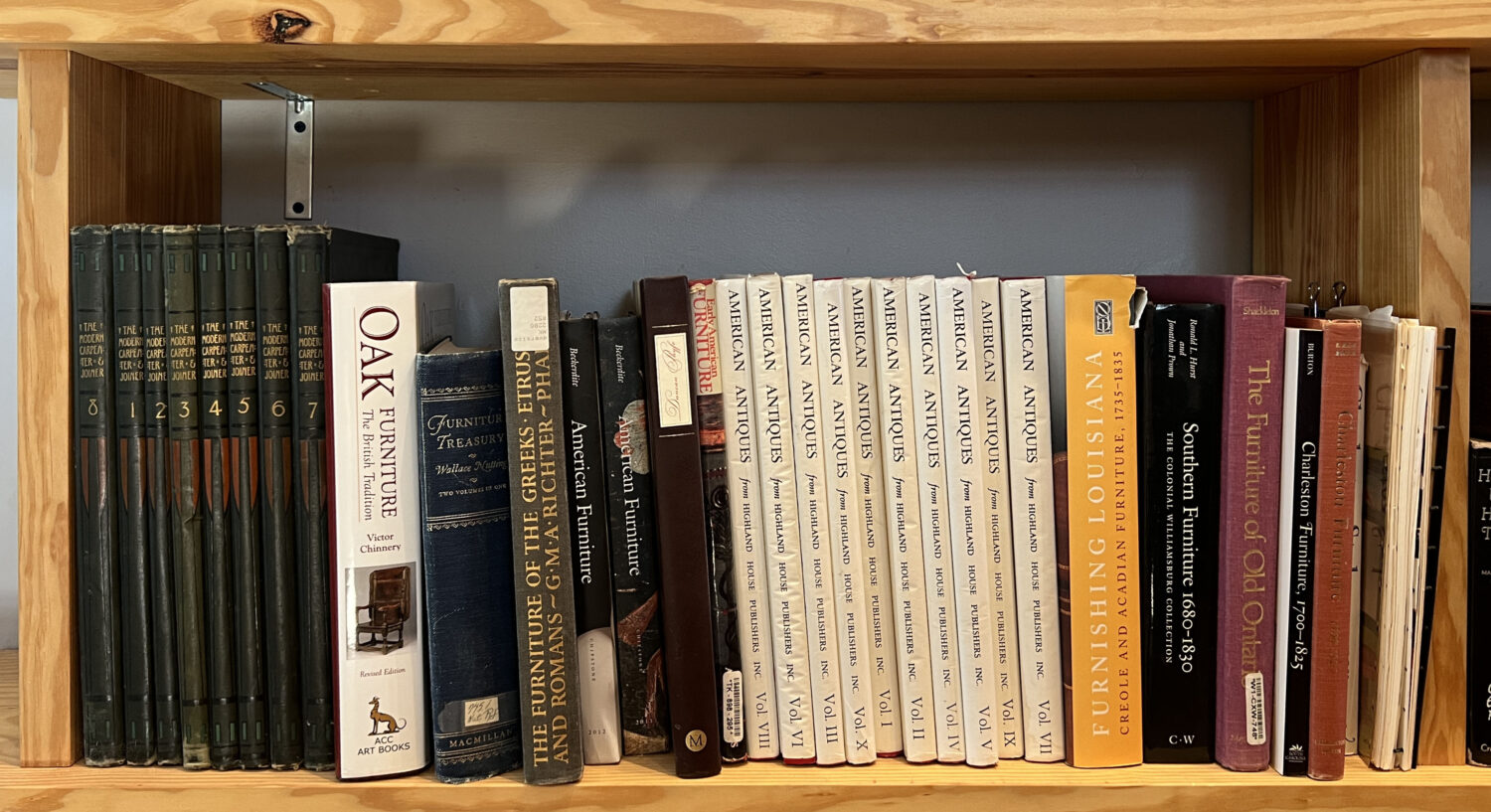
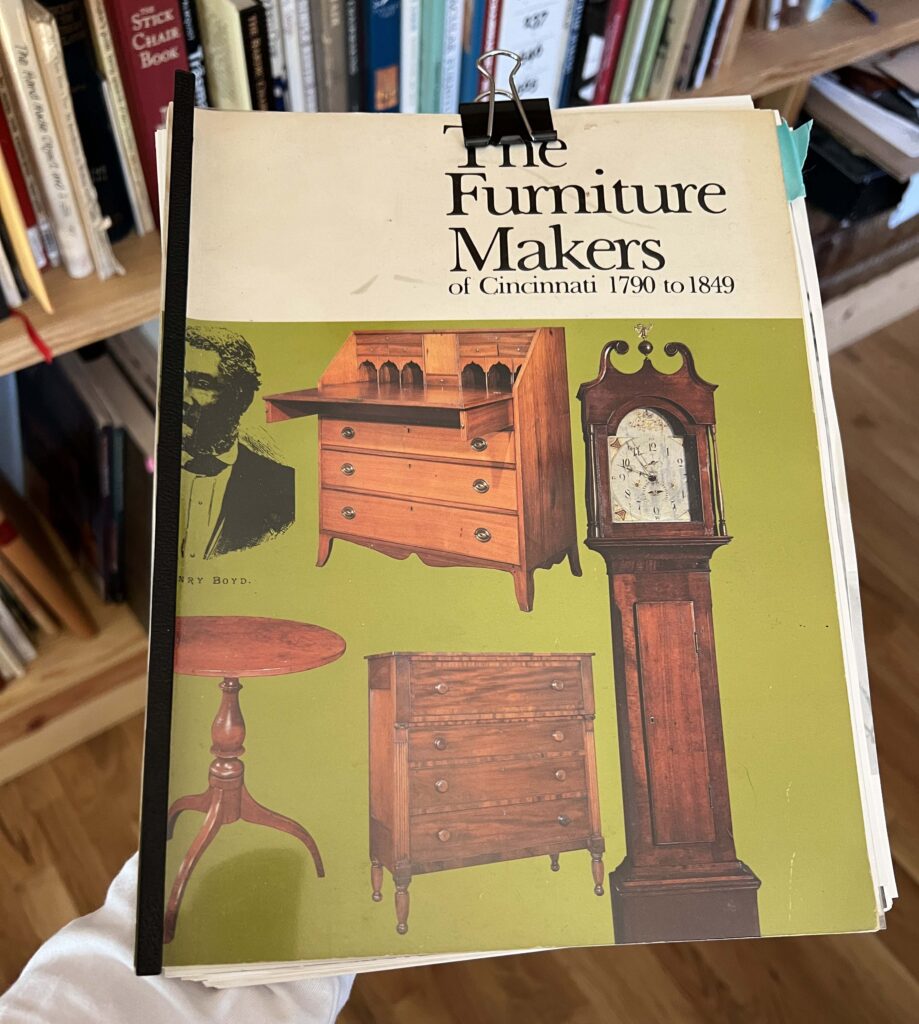
The lower left cubby in the Covington Mechanical Library is a bit of a hodgepodge that spans oceans and centuries. In it are two series of books, a British furniture tome, some American furniture collections – regional and not – a few Charleston furniture titles and a falling-apart copy of "The Furniture Makers of Cincinnati 1790 to 1849." Let's start there – on the far right.
Jane E. Sikes' "The Furniture Makers of Cincinnati 1790 to 1849," was first printed in 1976 by the author, and reprinted in paperback by the Merton Co. Chris bought this ragged copy decades ago because he lived in the area, knew a lot of furniture had been made here, and wanted to know more about what it looked like. It's also one of the first books in which he read anything about Henry Boyd – Chris first learned about him at the Golden Lamb (a storied inn and restaurant north of Cincinnati), where there is a Boyd Bed.
To the left are three books on the furniture of Charleston, S.C.: "Charleston Style" by Susan Sully (Rizzoli, 1999), "Charleston Furniture 1700-1825" by E. Milby Burton (Charleston Museum, 1955) in hardcover and a paperback copy of the same (U of South Carolina, 1970). Charleston – home to as many as 250 cabinetmakers in the early 18th century – was the Southern center of high-style furniture making in the Colonies, and while styles changed after the American Revolution to not as closely mimic the fashions of London, the city remained and important furniture location well into the Federal period. (The city also has some personal importance to Chris; his father lived there for more than a decade, so Chris spent a lot of time in the "Holy City.")
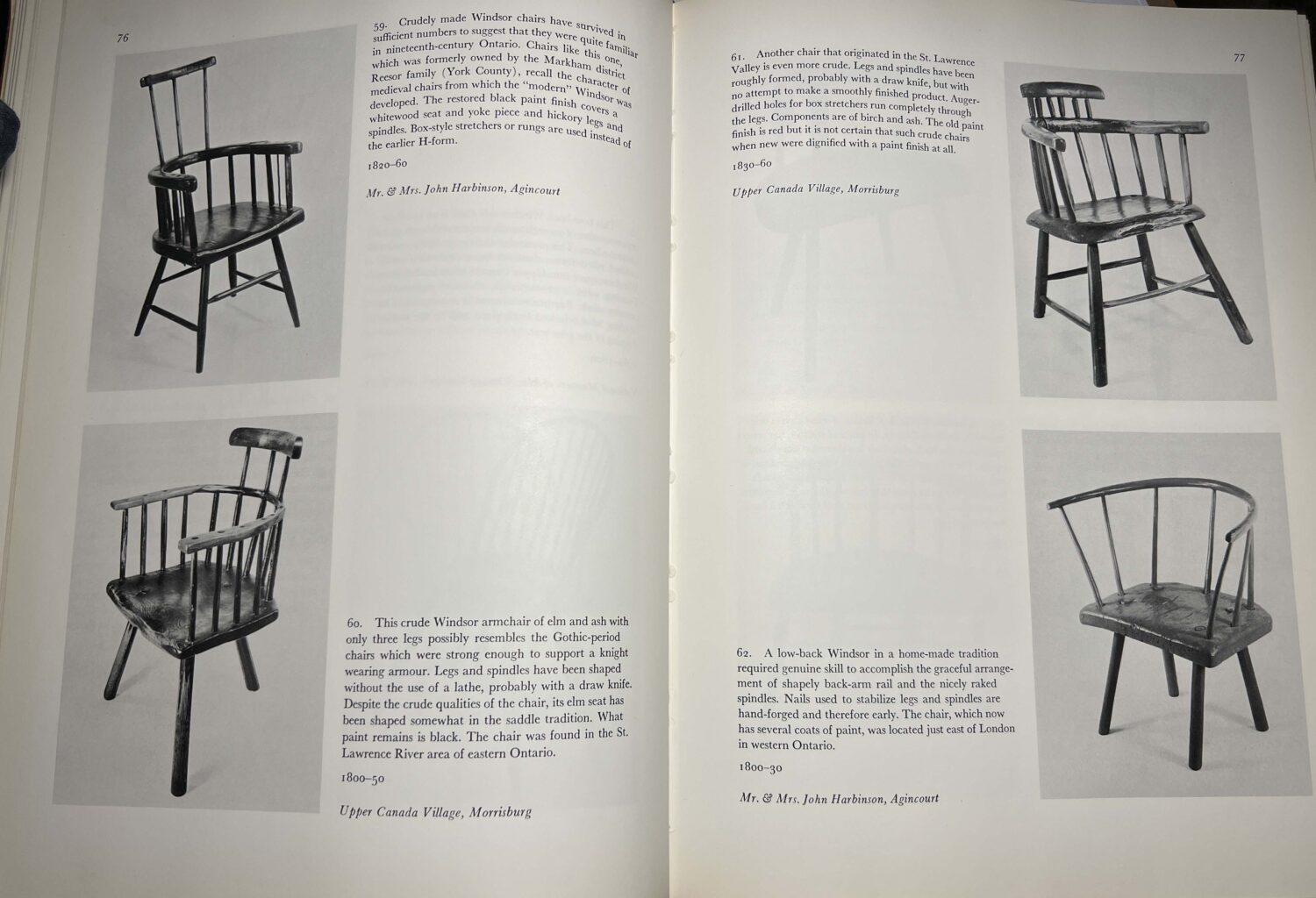
Then it's a whiplash trip to Canada, with "The Furniture of Old Ontario" by Philip Shackleton (Macmillan, 1973). Chris has always had an interest in vernacular furniture, and when we first delved into stick chairs, he couldn't find many in the furniture of the United States, so he wondered if there were any examples in other British colonies. So, we have several books in this vein scattered throughout the collection. (His curiosity paid off; below is a spread from this book – never mid that the chairs are identified as "Windsors.")
Now we head back to the American South with "Southern Furniture 1680-1830" by Ronald L. Hurst and Jonathan Prown (Colonial Williamsburg, 1977), and "Furnishing Louisiana: Creole and Acadian Furniture 1735-1835" by Jack D. Holden, H. Parrott Bacot and Cybele T. Gontar with Bruan J. Costello and Francis J. Puig.
To the left of the South are volumes 1-10 of "American Antiques from Israel Sack Collection" (Highland House, 1988-1992) According to the Washington Post, Sack (1883-1959), a dealer whose family firm specialized in early American furniture, was "reputed to have invented the American antique market." We consider this collection an important reference for anyone interested in American furniture.
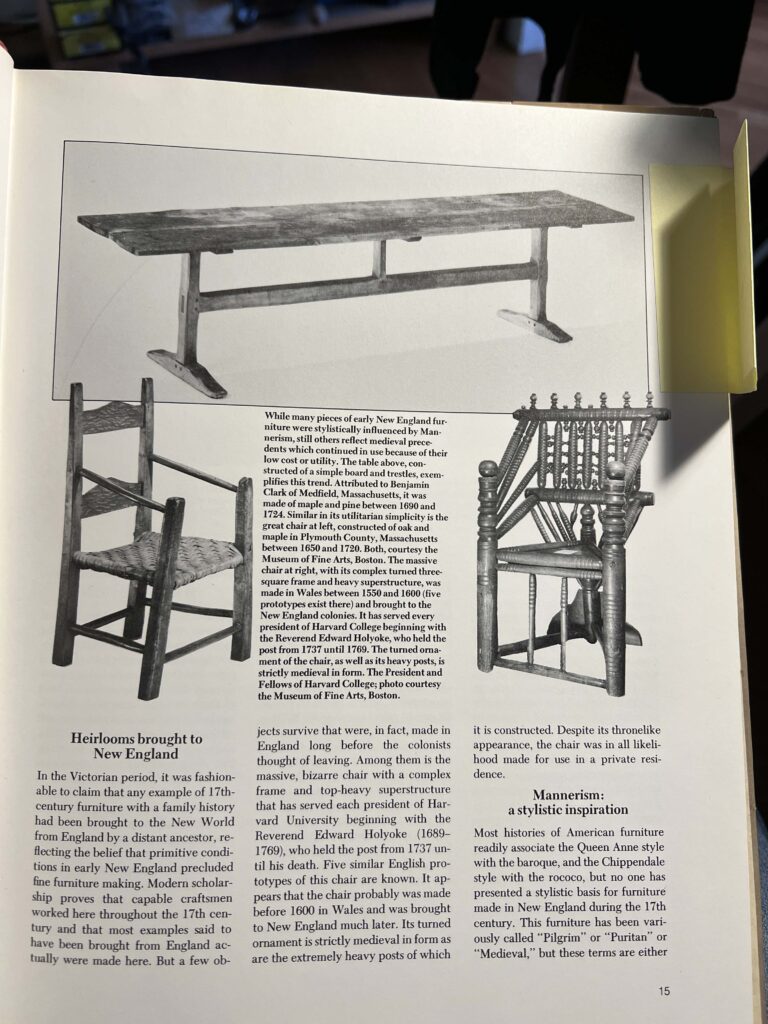
Then it's more in the same vein, with "Early American Furniture from Settlement to City" ed. by Mary Jean Madigan and Susan Colgan (Billboard Publications, 1983). I always have fun checking out the Post-It notes stuck to pages of our books, and trying to guess what Chris (and sometimes I – especially in our Shaker books) was working on at the time that sticky note was stuck there. In this case, I'm guessing it was the trestle table from the Autumn 2006 issue of Woodworking Magazine. (We've been working together for a loooonnnggg time.)
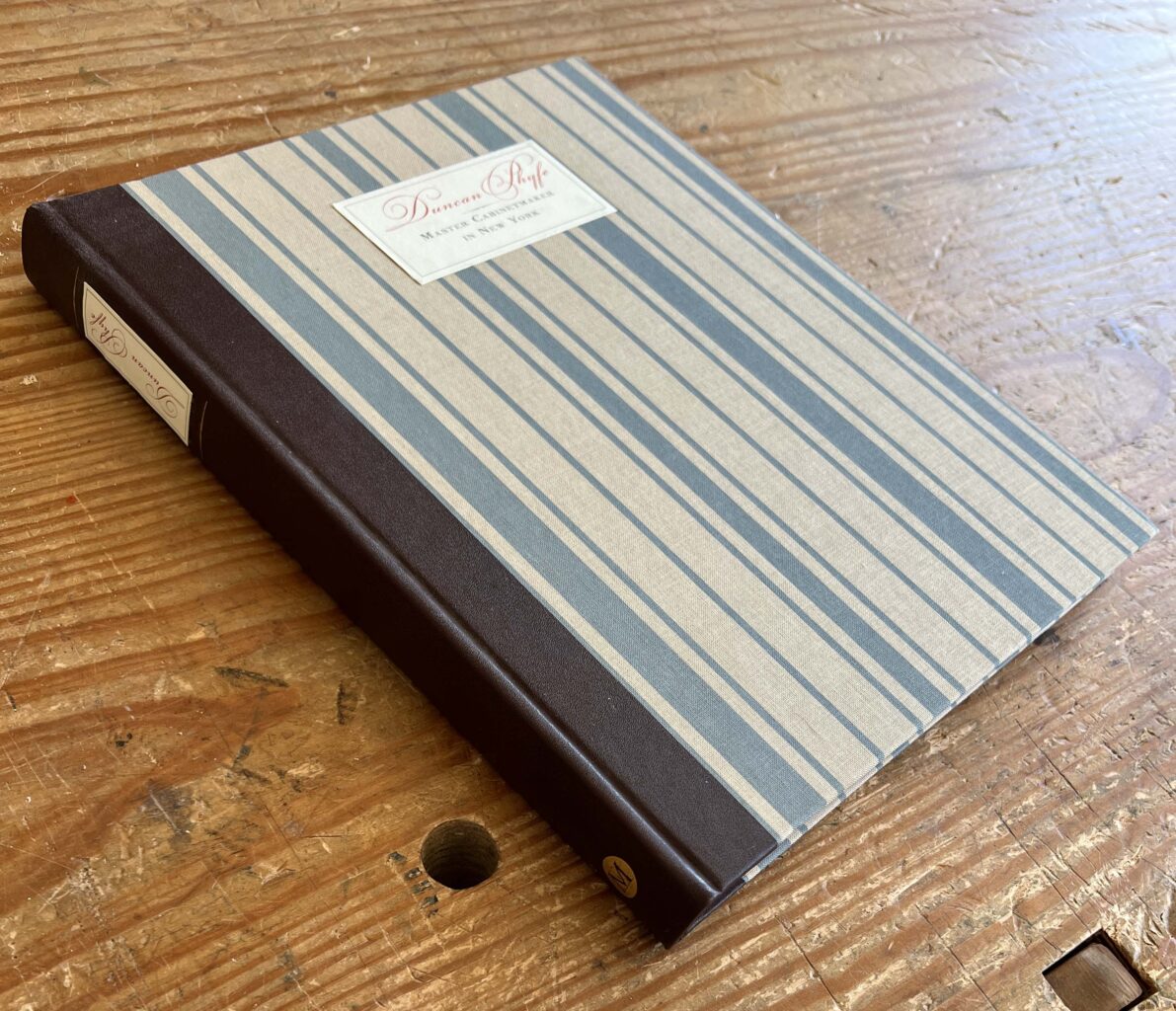
Then it's "Duncan Phyfe: Master Cabinetmaker in New York" by Peter N, Kennt and Michael K. Brown (Metropolitan Museum of Art, N.Y, 2011). Yes, Phyfe is undeniably an important American maker…but it's equally possible we have this one for its form factor. It's sewn signatures with headbands, and a "half bound" cloth-covered hardcover (leather or leather-like spine), with a tipped on title on both the front board and spine. It's a pretty thing inside and out.
To the left of that are two volumes of "American Furniture" edited by Luke Beckerdite (Chipstone, 2011 and 2012). For those unfamiliar, this annual is "an interdisciplinary journal dedicated to advancing knowledge of furniture used or made in the Americas from the seventeenth century to the present," as quoted from the volumes' editorial statements. It has been published every year since 1993. So why these two volumes? Chris says "I started buying them, then I fell off the wagon." Oops.
Now it's a quick trip to the other side of the globe (and back in time) for "The furniture of the Greeks, Etruscans and Romans" by GMA Richter (Phaidon, 1966) (more vernacular stuff – and Chris has been talking on and off about making a Klismos chair since I first met him, more than two decade ago.
Back to North America and a few thousand years forward to Wallace Nutting's "Furniture Treasury (Mostly of American Origin)" (Macmillan, 1965 – the "two volumes in one" version). You can't be a student of American furniture and not have some version of this one. An aside: Berea College in Berea, Ky., has a significant number of pieces from Nutting's collection.
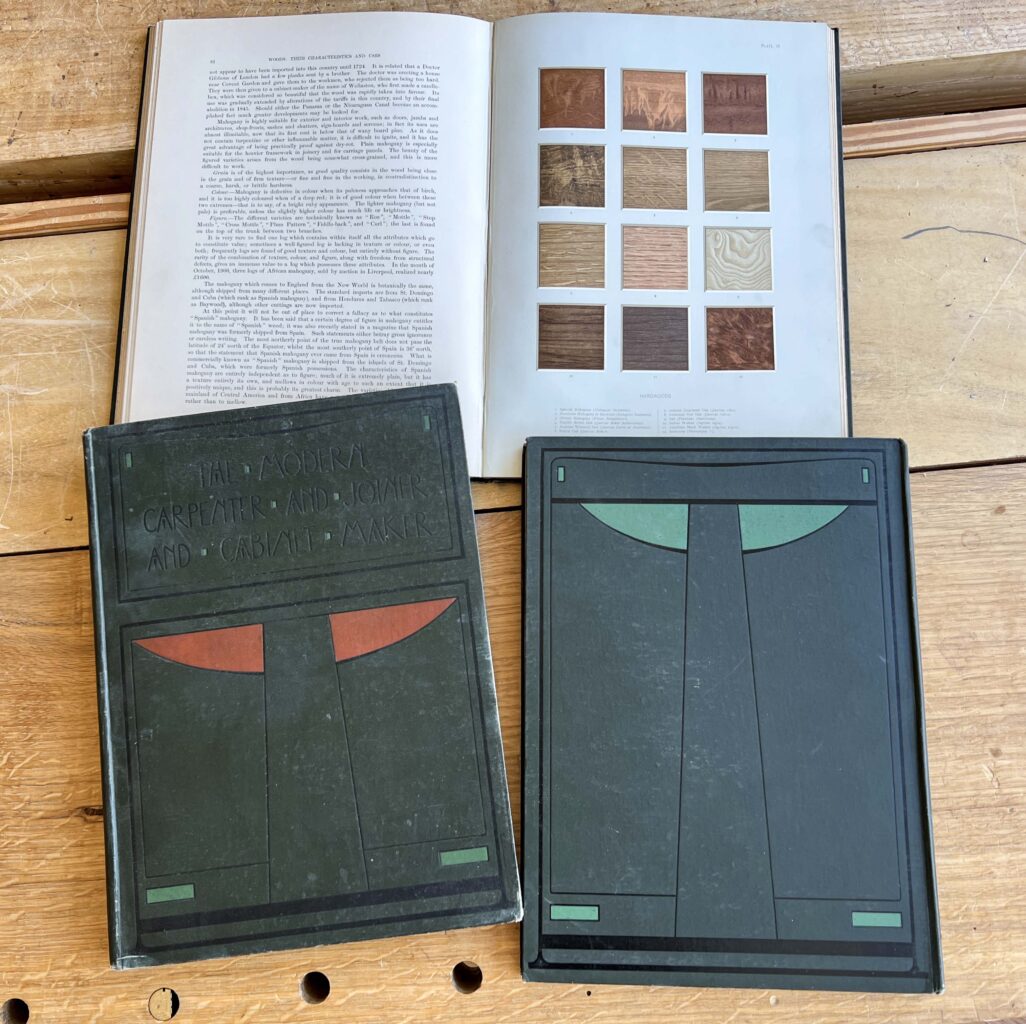
And finally, we come to my favorite series in our collection – if only in their looks and production – "The Modern Carpenter and Joiner and Cabinet Maker" edited by G. Lister Sutcliffe (Gresham, 1903). In terms of content, there isn't much there there; it's all information covered in greater detail elsewhere. But gosh do these eight volumes look nice, with tooled covers featuring a Glasgow Style design and typography by Talwin Morris.
— Fitz
p.s. This is the fourth post in the Covington Mechanical Library tour. To see the earlier ones, click on "Categories" on the right rail, and drop down to "Mechanical Library"



No comments:
Post a Comment